
June 4, 1989
In remembrance

I was once told, not so briefly, that the people in Hong Kong had it good and should not complain about changes. The conversation happened around early- to mid-2010s and was with someone from mainland China.
I was once told by another mainland Chinese that actions to express the desire for “democracy” started in her school near Beijing when she was a student there in the late 1980s. It sounded like small flames came together to become a fire that brought down the forest - almost.
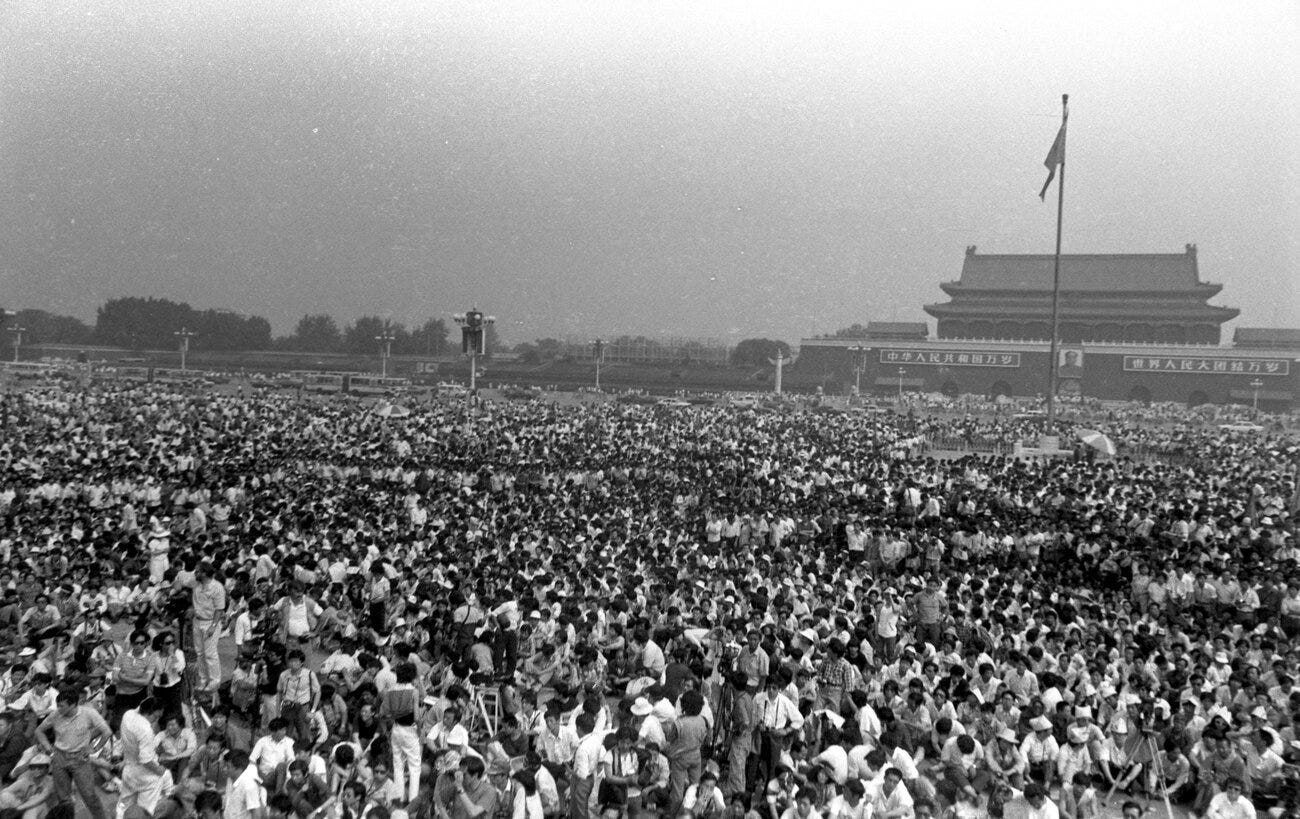
On the night of the 3rd, we were out celebrating a friend’s birthday. We knew that demonstrations had been happening in Beijing and in some other cities. The news coverage was ample. While some people in Hong Kong practiced the self-defined distinction between being a Chinese and a Hong-Konger, their parents or grandparents likely had direct ties to a village here or a town there north of the border. It would not be an exaggeration to say that everyone in Hong Kong was watching with bated breath. As a teenager, I wished for this change in China that would bring “democracy” and “freedom”. I had no specific ideas or any clue. It was a purely emotional response. What I had in Hong Kong was good; China was poor and backwards; if they had what I had, they would be better off!
After dinner, perhaps driven by the unexpressed gravitas we each felt inside, we invited ourselves to one of the friends’ home, to the dismay of her mother. About six of us made the trip from the peninsula side to the island side. We glued ourselves to the television watching the events unfolded. North of the border was a different and separate world. Our little colony was immune to the many misgivings and hardships experienced there. Our flag was blue and it bore a British crown. We were proud and isolated subjects who had accepted the upper limits for generations. By the same token, we were mostly oblivious to the ways of life in China. Our elders were the only link to the culture and traditions evolved over four millennia. To me, the reported demonstrations, including those in Tian-An-Men Square, were as close as I had ever come to feeling the pulse of the “motherland”. Earlier in that year, I had thought of visiting the Great Wall in Beijing during the summer because, well, it was perceived as a rite of passage. It was probably also my attempt to connect with an innate part inside and to make sense of an identity that could befuddle anyone given away by their birth parents. We stayed up to consume all the news coverage would offer. Perhaps this came from a sense of solidarity. Perhaps dreams kept us awake. Perhaps we were waiting for an ending. The morning of the 4th came shortly after the Square was cleared. Depleted, I left with the others and we were each home-bound.
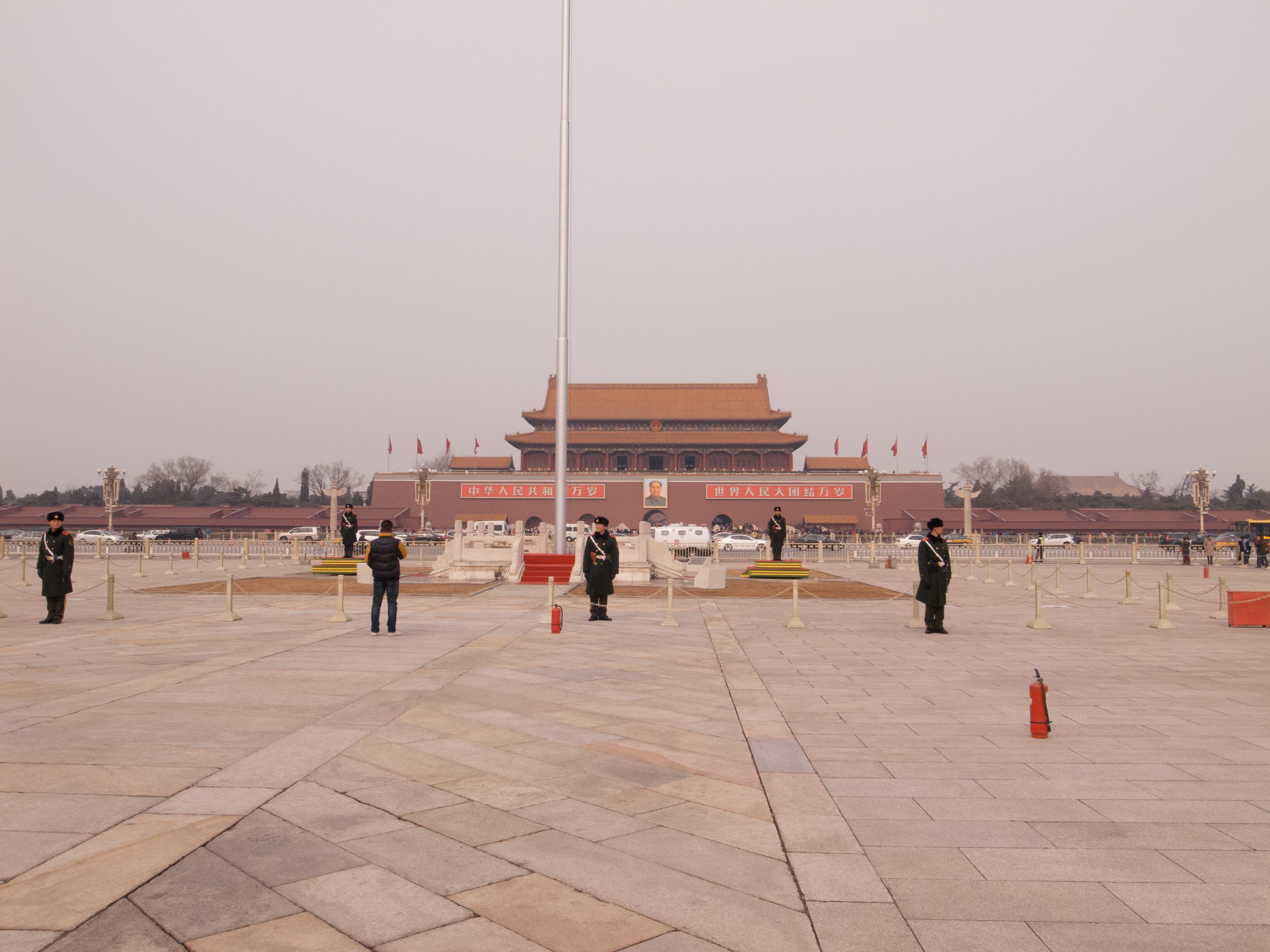
To the people in mainland China today, Tian-An-Men Square may have always been a heavily monitored public space with checkpoints, military presence, and fire extinguishers to counter self-immolation protests. Perhaps the decades-long economic prosperity has rendered this urgency felt 32 years ago frivolous and inconvenient. Perhaps the difference between free and not-free has significantly narrowed in this age of information and globalization. Perhaps the people of Hong Kong who wanted a representative government and the freedom enjoyed under the British rule are indeed missing the point, if not the time.
Prior to the U.S. presidential general election, I discussed the two options with someone who had expressed the intention of voting for Trump. The given reason was his perceived stance against the CCP which could, hopefully, change the fate of a fading Hong Kong. Beijing had stationed the PLA outside the Hong Kong border. The people of Hong Kong had been regularly protesting in the streets demanding universal suffrage. Given the precedents in Tibet and the Uyghurs, it seemed inevitable that Hong Kong would be imposed upon culturally and systematically. Its global status and established economy and stability could no longer shield Hong Kong from the desired assimilation enforced by a regime that took over the family less than a century ago. After all, Hong Kong was a child given away before its watch. There were very little, if any, resemblance left. I felt a bit of the same desire for change from some 30 years ago. But I also questioned warily the consequences to which the people are subjected should the CCP be controlled or ousted by outside influence. History shows that the people always pay dearly for it. Their lives, prosperity, sovereignty, and identity are always ignored and jeopardized.
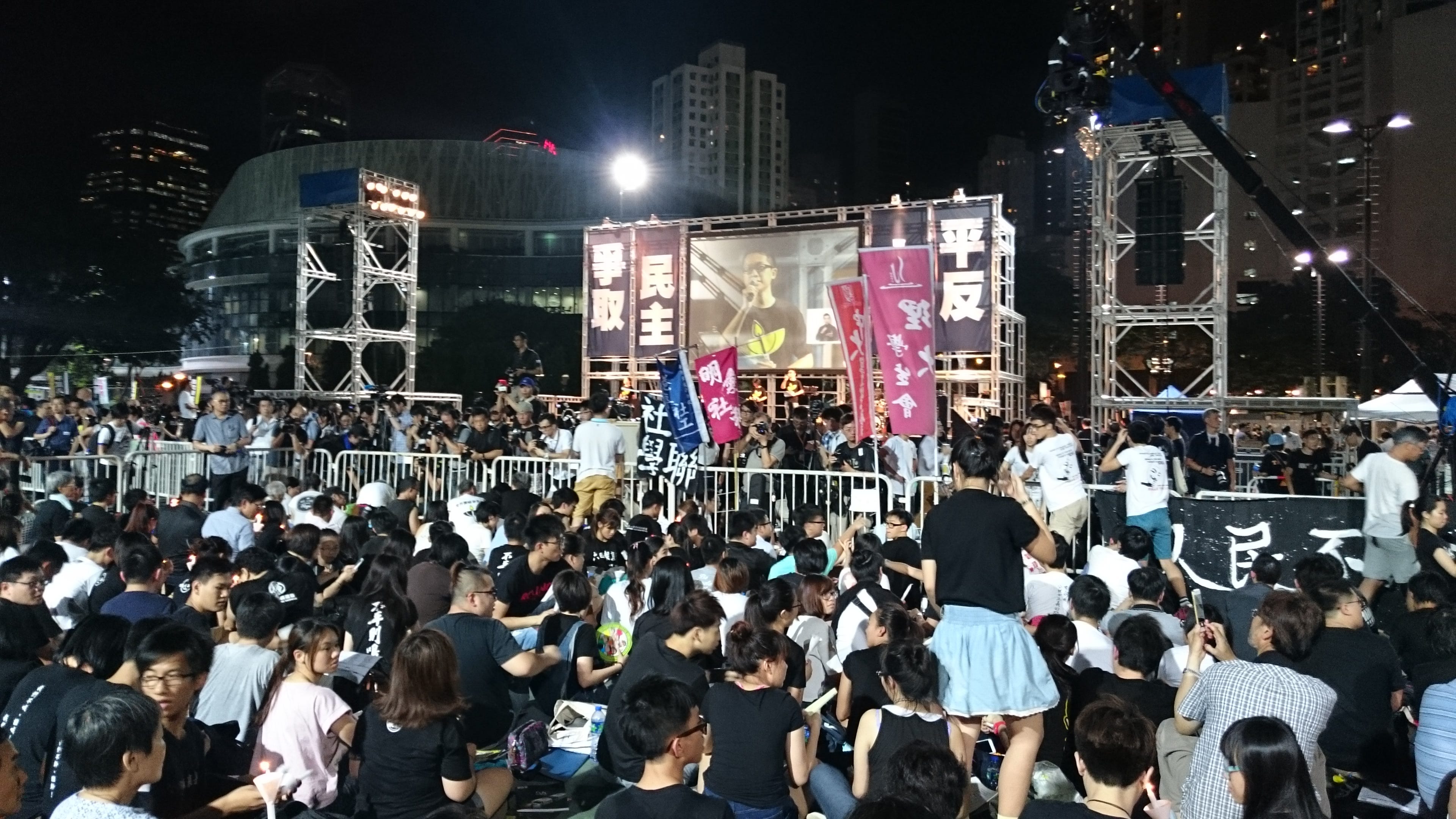
Every year, the people of Hong Kong would gather publicly on June 4th to commemorate all that had culminated at Tian-An-Men Square in 1989 and the aftermath. For decades, the people were free to speak about it and to express viewpoints, until this year of 2021. This is now forbidden by the government. Dressing in black can also lead to questioning or arrest. The annual vigil was our rite of passage, our link to a past, our recognition of sacrifices and dreams. Censorship and history in the last sliver of CCP controlled soil are now being dictated by the dozens of politburo members who rule the 1.4 billion Han, Zhuang, Manchu, Hui, Miao, Uyghur, Yi, Tujia, Mongol, Tibetan, Buyei, Yao, and Korean Chinese.
Among them all, one symbol that illustrated well the often disproportionate and tone-deaf official responses is “Tank Man”. However, this time, 32 years later, the column of tanks did not stop. Has economic prosperity made us more complacent that we stand less straight and tall than the man who once held two plastic bags? Or has it made us more emboldened that we drive straight through all “obstacles” with abandon?
👍🏻